By THRITON Editorial
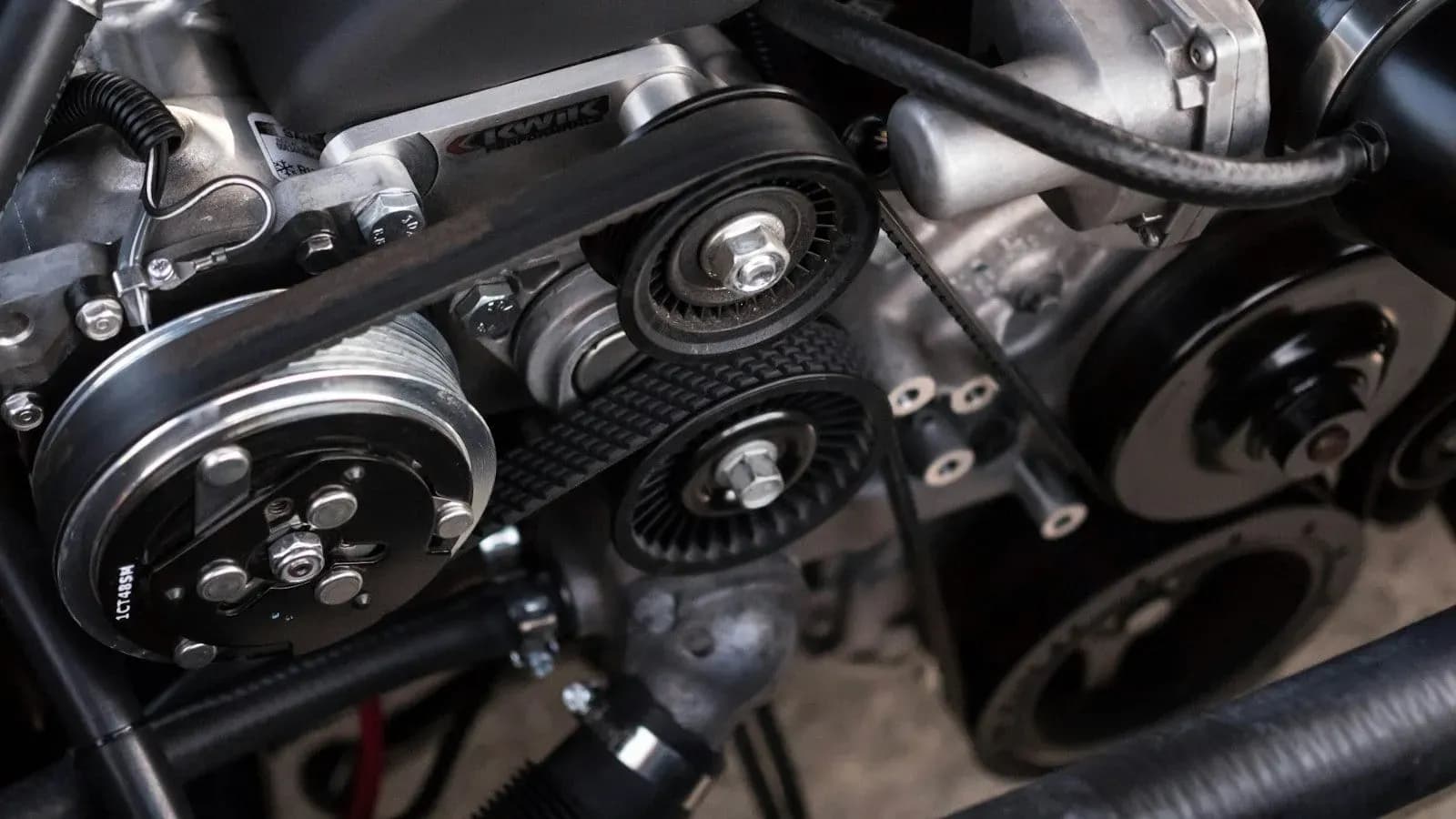
Your engine is heavy and it shakes: every combustion stroke sends a small jolt through it. Engine mounts are the rubber-and-metal blocks that hold the engine and gearbox to the car's frame. They keep the engine in place and soak up its vibration, so you do not feel it in the cabin.
How a mount works
A typical mount is a block of specially formulated rubber bonded between two metal brackets. The metal side bolts to the engine and the frame; the rubber in between flexes just enough to absorb vibration. Some mounts are filled with fluid for extra damping, especially on cars with large engines.
Why mounts wear out
- Age: rubber slowly hardens and cracks, even on cars that are not driven much.
- Heat: the engine bay gets very hot, which speeds up ageing.
- Oil leaks: engine oil softens rubber and makes it break down.
- Hard driving: fast starts and sudden gear changes twist the mount every time.
Symptoms of a worn engine mount
- Strong vibration in the steering wheel, seats or pedals, especially at idle
- A clunk or bang when you start the engine, accelerate or shift between drive and reverse
- The engine visibly rocks when someone revs it with the bonnet open
- Rough, jerky gear changes
How to check them
With the bonnet open and the handbrake firmly on, ask a helper to shift between drive and reverse while pressing the brake. If the engine jumps more than a little, a mount is likely worn. A mechanic will also look for cracked rubber, rubber separated from the metal, and fluid leaking from hydraulic mounts.
Why it matters
A broken mount lets the engine move too much. That stresses hoses, wiring, exhaust parts and the other mounts, which then fail faster. Replacing a worn mount early is a small job that prevents much bigger repairs.
Replacement tips
Mounts on the same engine age together, so when one has failed, check the others. Always match the new mount to your car by its OEM number, because shape, hardness and bolt positions differ between models and engine versions.